
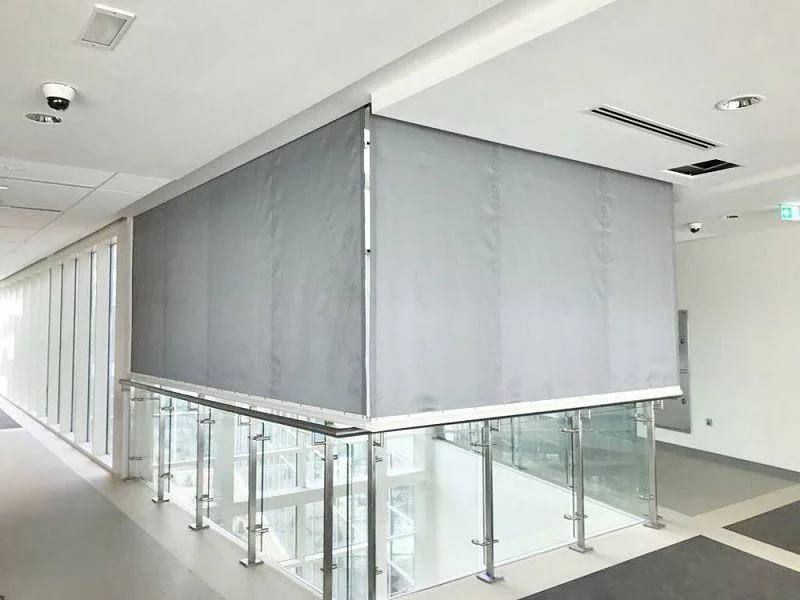
Fire safety technologies continue to evolve as buildings become more complex and open in design. Many modern commercial spaces feature large open layouts, glass walls, and interconnected areas that can allow fire and smoke to spread quickly if proper safety systems are not installed. One solution gaining attention in contemporary building design is the use of fire curtains. These specialised systems help manage fire risks while maintaining flexible architectural designs.
How Do Fire Curtains Work During a Fire Emergency?
Fire curtains are specially designed barriers that remain hidden in ceilings or walls during normal building operations. When a fire alarm system detects smoke or heat, the curtain automatically deploys and forms a protective barrier. This barrier helps contain flames and smoke within a designated area of the building.
Unlike traditional fire doors or solid walls, fire curtains can cover large openings such as atriums, stairwells, escalator spaces, or wide corridors. Once activated, the curtain drops down and creates a temporary fire-resistant partition that helps slow the spread of fire and smoke.
This containment provides valuable time for occupants to evacuate safely and allows emergency responders to control the situation more effectively.
Why Are Open-Plan Buildings Increasing the Need for Fire Curtains?
Modern architectural trends favour open spaces, natural light, and minimal structural barriers. While this approach improves aesthetics and functionality, it can also increase fire safety challenges. Large open areas may allow fire to spread rapidly without physical barriers to slow it down.
Because fire curtains remain hidden until they are needed, they allow designers to maintain open layouts while still incorporating strong safety measures. This flexibility makes them a practical option in buildings where traditional walls or doors may interfere with the overall design.
Shopping centres, theatres, office complexes, and transport hubs are among the locations where fire curtains are frequently used to manage large internal spaces.
Why Are Businesses Installing fire curtains in Melbourne Buildings?
Commercial properties are increasingly adopting fire curtains in Melbourne to improve fire containment without altering building aesthetics. Melbourne’s commercial sector includes high-rise offices, shopping centres, entertainment venues, and hospitality spaces, all of which require effective fire management systems.
Fire curtains offer a discreet solution that integrates with modern building design. They can be installed above ceilings or within wall cavities, remaining almost invisible until activated. When deployed, they create a protective barrier that limits the movement of flames and smoke between sections of the building.
This capability helps protect evacuation routes, reduces potential structural damage, and supports compliance with building safety regulations.
Where Are Fire Curtains Commonly Installed?
Fire curtains can be installed in various areas where fire containment is necessary but permanent barriers are not practical. Large atriums in commercial buildings often use fire curtains to separate multiple floors during emergencies. Escalator openings and lift lobbies are also common installation points.
Retail environments frequently install fire curtains behind shopfront openings to prevent flames from spreading into shared corridors. Hotels and entertainment venues may also use them around stage areas, hallways, or service zones to improve safety while maintaining open design concepts.
Because they can cover wide openings and operate automatically, fire curtains are well suited for locations that require both accessibility and fire protection.
What Should Property Owners Consider Before Installing Fire Curtains?
Selecting the right fire curtain system requires careful planning and professional assessment. Building size, layout, and occupancy levels all influence the type of system required. Fire curtains must also integrate with the building’s alarm and detection systems so they activate at the right moment.
Routine inspections and maintenance are equally important. Like any fire safety equipment, fire curtains must be tested regularly to ensure they deploy correctly during emergencies. Professional servicing helps maintain reliability and ensures compliance with safety standards.
Conclusion
Modern buildings demand fire protection systems that balance safety with architectural flexibility. Fire curtains provide an effective way to contain fire and smoke without compromising open design concepts. By incorporating fire curtains in Melbourne, commercial properties can enhance building safety, protect evacuation pathways, and support compliance with fire regulations while maintaining contemporary design standards.




