
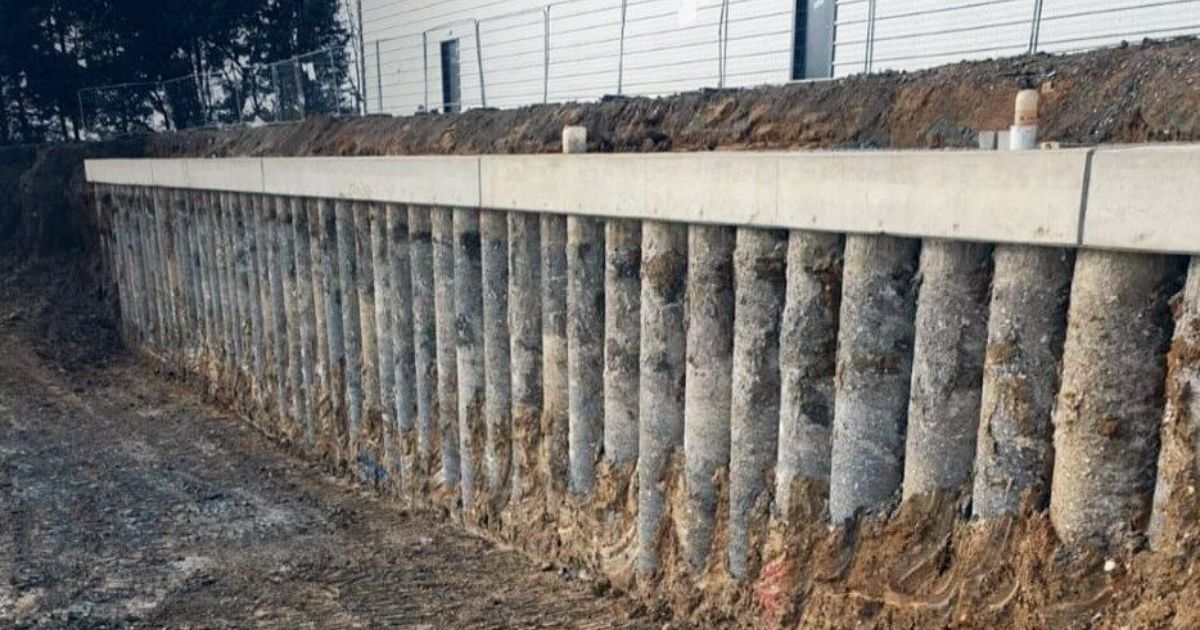
In modern construction, managing ground stability is just as important as building the structure itself. One widely used method for supporting excavations and retaining soil is contiguous piling. This technique provides an effective solution for projects where space is limited and soil conditions require careful handling. By forming a continuous barrier of closely spaced piles, it ensures both safety and structural integrity during and after construction.
What is Contiguous Piling
Contiguous piling involves installing a series of reinforced concrete piles in close proximity, with small gaps between them. Unlike other methods that create a fully sealed wall, this approach allows for slight spacing while still providing strong ground support.
It is commonly used in situations where:
- Soil is relatively stable but still requires reinforcement
- Groundwater control is not a primary concern
- Cost efficiency and speed are important factors
This balance between performance and practicality makes it a popular choice across various construction projects.
How the Technique Works
The process of contiguous piling is systematic and carefully planned to ensure accuracy and effectiveness.
- The site is assessed to determine soil conditions and load requirements
- Pile positions are marked with precise spacing
- Holes are drilled into the ground using specialised equipment
- Reinforcement cages are inserted into each bore
- Concrete is poured to form individual piles
Once completed, these piles collectively act as a retaining structure, supporting surrounding soil during excavation.
Key Advantages of Contiguous Piling
This method offers several benefits that make it suitable for both small and large-scale developments.
- Cost-effective solution: Requires less material compared to fully interlocking systems
- Reduced installation time: Faster to implement due to simpler design
- Minimal vibration: Ideal for areas near existing structures
- Flexible application: Suitable for a variety of soil types
These advantages contribute to its widespread use in urban construction environments.
Where Contiguous Piling is Commonly Used
Contiguous piling is particularly effective in projects where excavation support is needed without the requirement for a completely watertight barrier.
Typical applications include:
- Basement construction in residential and commercial buildings
- Retaining walls for excavation sites
- Infrastructure projects such as roads and tunnels
- Developments in densely built urban areas
Its adaptability makes it a reliable option in both straightforward and complex construction scenarios.
Limitations to Consider
While contiguous piling is highly effective, it is not suitable for every situation. Understanding its limitations helps in making the right choice.
The gaps between piles mean it is not ideal for sites with high groundwater levels, as water can seep through. In such cases, alternative methods may be more appropriate.
Additionally, very loose or unstable soil conditions may require more robust piling solutions to ensure adequate support.
Comparing Contiguous Piling with Other Methods
To better understand its value, it helps to compare contiguous piling with similar techniques:
- Secant piling: Provides a fully interlocked, watertight wall but at a higher cost
- Sheet piling: Uses steel sheets for quicker installation but may involve more vibration
- Diaphragm walls: Offers high strength and water resistance but requires more complex execution
Contiguous piling sits in the middle, offering a balance between cost, efficiency, and performance.
Conclusion
Achieving ground stability is a critical step in any construction project, and the right method can significantly influence both safety and efficiency. With its practical design and reliable performance, contiguous piling continues to be a preferred choice for many developments. By understanding its strengths and limitations, project planners can make informed decisions that support long-term structural success while maintaining cost efficiency.




