
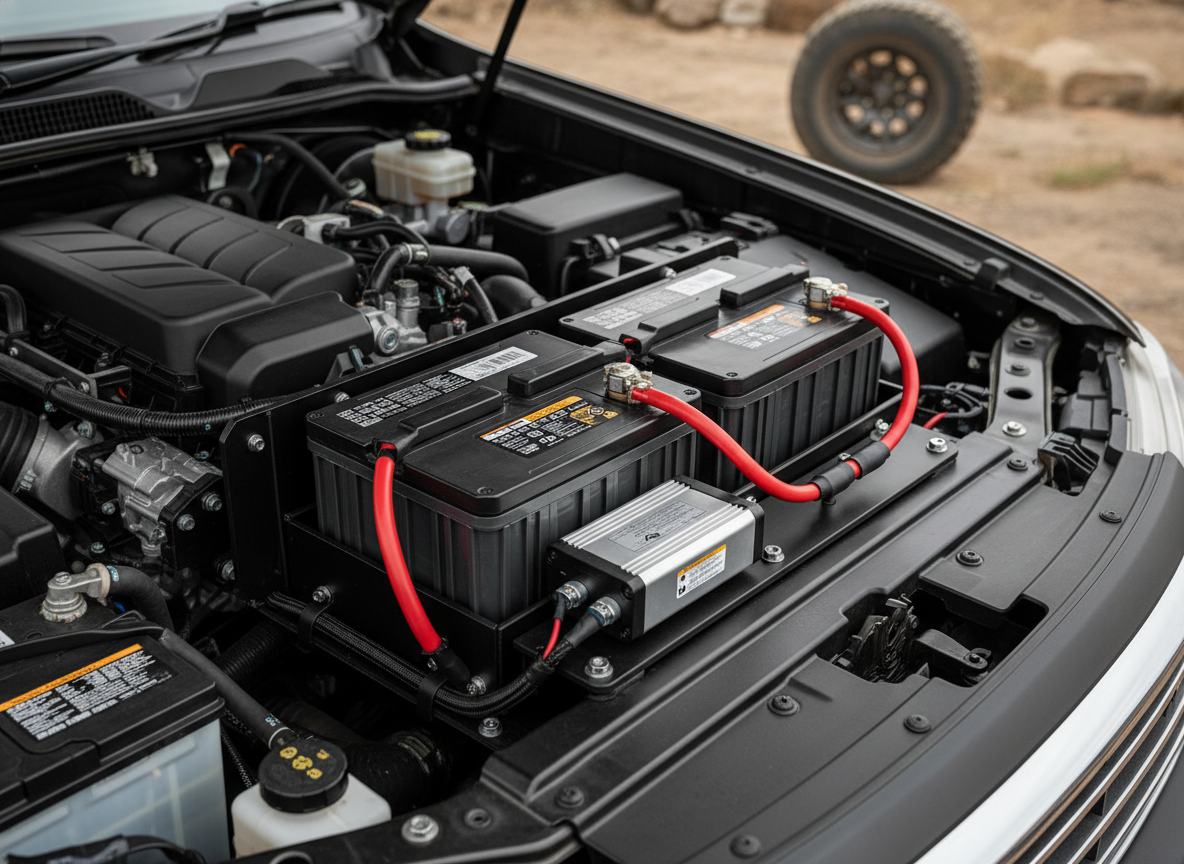
When you’re out on rugged terrain or spending extended periods off the grid, your 4WD dual battery system becomes crucial for maintaining electrical power. Properly managing and optimising this system ensures that you have reliable energy for your vehicle’s accessories and any other power needs. Here’s a comprehensive guide on how to maximise the performance of your 4WD dual battery system.
Understand Your System Components
A typical 4WD dual battery system consists of two batteries, an isolator, and wiring. The primary battery starts the engine, while the auxiliary battery powers additional accessories like lights, fridges, or other equipment. Understanding each component’s role is essential for optimising performance.
- Main Battery: Provides power to start the vehicle and run essential systems.
- Auxiliary Battery: Powers extra accessories and is crucial for off-grid power.
- Isolator: Prevents the auxiliary battery from draining the main battery and ensures that both batteries charge properly.
Choose the Right Batteries
The performance of your dual battery system heavily depends on the quality and type of batteries used. For optimal performance:
- Opt for Deep Cycle Batteries: These are designed to handle frequent discharges and recharges, making them ideal for powering accessories.
- Match Battery Types: Ensure both batteries are of similar type and capacity to avoid imbalance and inefficient performance.
- Consider Battery Size: Larger batteries can store more energy, which is beneficial for extended trips.
Regular Maintenance and Checks
Maintaining your dual battery system is key to its longevity and efficiency. Regular checks should include:
- Battery Charge Levels: Ensure both batteries are fully charged and maintain proper charge levels to prevent issues.
- Terminals and Connections: Inspect terminals for corrosion or damage and ensure all connections are tight and secure.
- Clean and Tighten: Regularly clean the battery terminals and tighten connections to prevent power loss and potential electrical failures.
Upgrade Your Wiring
Quality wiring can significantly impact the performance of your dual battery system. For better efficiency:
- Use Proper Gauge Wires: Larger gauge wires reduce resistance and allow for more efficient power transfer.
- Install a Fuse or Circuit Breaker: Protects your system from overloads and potential short circuits.
Optimise the Charging System
To ensure that both batteries charge efficiently:
- Install a DC-DC Charger: This device optimises the charging process and ensures the auxiliary battery receives the correct voltage and current.
- Adjust Charging Settings: Some chargers have settings that can be adjusted based on the type of battery, ensuring a more effective charge.
Monitor Battery Health
Regular monitoring helps identify issues before they become major problems:
- Use a Battery Monitor: This tool provides real-time data on battery voltage, charge status, and overall health.
- Perform Regular Load Tests: Load testing helps assess the battery’s ability to hold a charge and perform under stress.
Power Management
Efficient power management can help extend battery life and ensure reliability:
- Prioritise Critical Systems: Use the auxiliary battery primarily for essential accessories.
- Limit Power Draws: Avoid running too many accessories simultaneously to prevent overloading the system.
Conclusion
Maximising the performance of your 4WD dual battery system involves understanding its components, choosing the right batteries, maintaining the system, upgrading wiring, optimising the charging process, monitoring battery health, and managing power effectively. By following these steps, you can ensure that your dual battery system performs reliably, providing the power you need for all your off-road adventures. Proper maintenance and thoughtful upgrades will not only extend the life of your batteries but also enhance your overall 4WD experience.




