
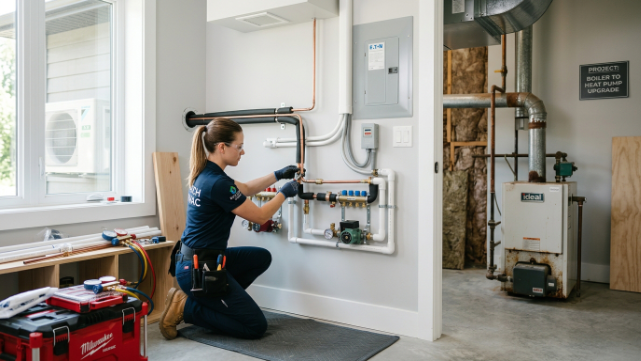
An ageing heating system can gradually become less efficient, leading to higher energy consumption and inconsistent indoor comfort. For many homeowners, deciding to replace gas boiler systems is an opportunity to improve heating performance and prepare their property for modern energy solutions.
Whether your existing boiler is nearing the end of its lifespan or you’re planning a home renovation, upgrading your heating system can provide greater reliability and support your long-term comfort goals.
Signs Your Gas Boiler May Need Replacing
Boilers often show signs of wear before they stop working completely. Identifying these issues early can help you plan a replacement before an unexpected breakdown occurs.
Some common signs include:
- Frequent repair requirements
- Uneven heating throughout the home
- Rising energy bills
- Unusual noises during operation
- Difficulty maintaining a comfortable temperature
- An older system with reduced efficiency
If these issues become more frequent, it may be time to replace gas boiler equipment rather than continue investing in repairs.
Advantages of Upgrading Your Heating System
Modern heating systems are designed to deliver improved performance while supporting better energy efficiency.
Some benefits of replacing an older boiler include:
- More consistent indoor temperatures
- Improved energy efficiency
- Reduced maintenance requirements
- Enhanced heating reliability
- Better compatibility with modern heating technologies
- Increased property appeal
Upgrading can improve both everyday comfort and the overall performance of your home’s heating system.
Heating Options to Consider
When planning to replace gas boiler, homeowners have several alternatives depending on their property and heating needs.
Popular options include:
- Air source heat pumps
- Hydronic heating systems
- Electric boilers
- Underfloor heating systems
- Hybrid heating solutions
Each system offers different features, making it important to choose one that matches your home’s design and heating requirements.
Factors to Consider Before Replacing Your Boiler
Before selecting a new heating system, it is helpful to evaluate several key aspects of your property.
These include:
- The size of your home
- Existing heating infrastructure
- Insulation levels
- Household heating demand
- Available installation space
- Long-term energy goals
A detailed assessment can help ensure the new system operates efficiently and meets your expectations.
Planning for the Future
Replacing a gas boiler is not only about addressing current heating issues. It is also an opportunity to invest in technology that supports future energy efficiency and changing household needs.
Modern heating systems can offer greater flexibility, improved control, and compatibility with evolving building standards, making them a worthwhile consideration for long-term home improvement.
Final Thoughts
Choosing to replace gas boiler systems is a practical step towards improving comfort, efficiency, and heating reliability. With a range of modern alternatives available, homeowners can select a solution that suits their property, lifestyle, and future energy objectives. Careful planning and choosing the right heating system can help deliver dependable warmth and long-term value for years to come.




