
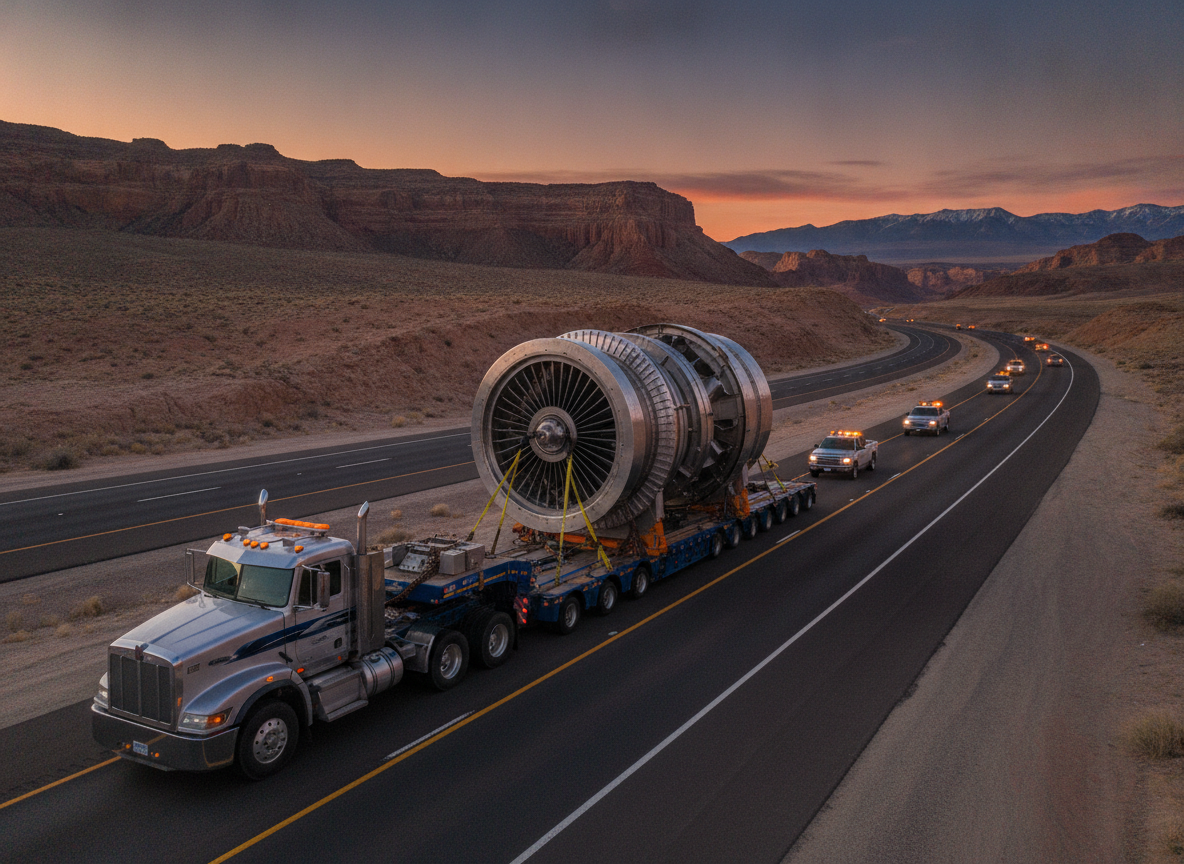
Moving heavy equipment from one location to another sounds straightforward until you’re standing in front of a ten-tonne excavator, a large printing press, or an industrial CNC machine that needs to travel across a city with some of the most congested roads in Australia. Machinery transport in Sydney requires considerably more planning, specialised equipment, and logistical expertise than a standard freight job — and the cost of getting it wrong, whether that’s damage to the machine, delays to a project, or an incident on the road, is rarely small.
Why Machinery Transport Is Its Own Discipline
Standard freight and general haulage deal with loads that fit within conventional weight and dimension limits. Machinery transport frequently doesn’t. Industrial equipment is often heavy, awkward in shape, low to the ground, or too wide for a standard trailer without special rigging and load preparation. Moving it safely requires a clear understanding of weight distribution, tie-down engineering, trailer selection, and the route constraints that apply between the pickup and delivery points.
Sydney’s geography adds its own layer of complexity. Bridge height restrictions, load limits on certain roads and bridges, tunnel clearances, and the sheer volume of traffic across the metropolitan area all affect which routes are viable and what time of day movements can or should take place. A route that looks efficient on paper may be entirely unsuitable once bridge heights, road conditions, and permit requirements are factored in.
Types of Machinery Commonly Transported
The range of equipment that needs to move across Sydney is broad, and the right transport approach varies considerably depending on what’s being moved. Common machinery transport jobs include:
- Construction equipment — excavators, bobcats, graders, rollers, and compactors
- Agricultural machinery moving to and from rural supply points around the Sydney basin
- Industrial manufacturing equipment including lathes, presses, and fabrication machinery
- Medical and laboratory equipment requiring careful handling and vibration management
- Mining and earthmoving equipment transiting through Sydney to regional destinations
- Cranes, forklifts, and lifting equipment relocating between worksites
- Printing, packaging, and processing machinery during factory relocations
Each of these has different requirements in terms of trailer type, securing method, access at origin and destination, and any permits or escorts that may be required.
Planning the Move: What Needs to Be Sorted Upfront
The more thoroughly a machinery transport job is planned before anything moves, the smoother the execution tends to be. Key considerations that need to be worked through before a truck is booked include:
Dimensions and weight — accurate measurements of length, width, height, and gross weight are the starting point for everything else. These determine what trailer is required, whether any oversized load permits are needed, and what routes are viable given clearance and load restrictions along the way.
Access at both ends — the site the machinery is leaving and the site it’s arriving at both need to be assessed for access. Overhead clearances, gate widths, ground conditions, turning circles, and proximity to other structures all affect how straightforward loading and unloading will be and whether any additional equipment such as a crane or forklift is needed on site.
Permit requirements — loads that exceed standard dimensions or weight limits require permits from Transport for NSW before they can legally move on Sydney’s roads. Depending on the load, these can be obtained electronically for straightforward oversized loads, or may require a full route assessment and escort vehicle arrangement for more complex movements.
Timing — certain oversized load movements in Sydney are restricted to specific hours, often outside peak traffic periods and in some cases limited to overnight windows. Factoring these restrictions into the schedule from the outset avoids the frustration of discovering a time-sensitive job can’t move when planned.
Choosing the Right Transport Provider
Not every transport company has the equipment, experience, and permits to handle heavy or oversized machinery safely across Sydney. When evaluating providers, it’s worth looking beyond price to consider:
- Fleet capability — does the provider have access to the right trailer types for the specific load? Low loaders, drop decks, extendable trailers, and multi-axle configurations all suit different machinery types
- Rigging and securing expertise — how the load is secured is as important as how it’s transported. Chains, binders, straps, and blocking need to be correctly specified and applied for the load in question
- Permit handling experience — a provider familiar with NSW permit requirements can assess what’s needed quickly and manage the application process without delays
- Insurance coverage — machinery transport involves significant asset values, and confirming the provider’s insurance covers the full replacement value of the equipment being moved is a non-negotiable step
- Track record with similar loads — experience with the type of machinery being moved reduces the chance of unexpected problems during loading, transit, or delivery
Preparing the Machinery for Transport
The condition of the machinery before it moves has a direct bearing on how smoothly the job goes. Preparation steps that make a practical difference include draining fluids where required, retracting or removing protruding components, lowering booms or attachments to their transport position, disconnecting batteries on mobile equipment, and confirming that all access points are secured. Any pre-existing damage should be documented with photographs before loading to avoid disputes about the condition of the machinery on arrival.
Managing Time-Sensitive Machinery Moves
For businesses relocating equipment as part of a broader project — a factory move, a construction mobilisation, or an equipment upgrade — the machinery transport timeline needs to align with everything else happening around it. Delays to equipment arrival can cascade quickly into delays across the broader project, which is why building realistic contingency into the transport schedule and confirming all logistical details well in advance matters as much as the transport itself.
Getting It Done Without the Headaches
Machinery transport in Sydney is one of those tasks where the value of experience is immediately obvious — the right provider anticipates problems before they happen, has the right equipment ready, handles the permit process without fuss, and delivers the machine in the same condition it left. Taking the time to plan properly, choose the right transport partner, and prepare the machinery correctly before it moves is what separates a smooth, uneventful job from one that becomes a story about what went wrong.




