
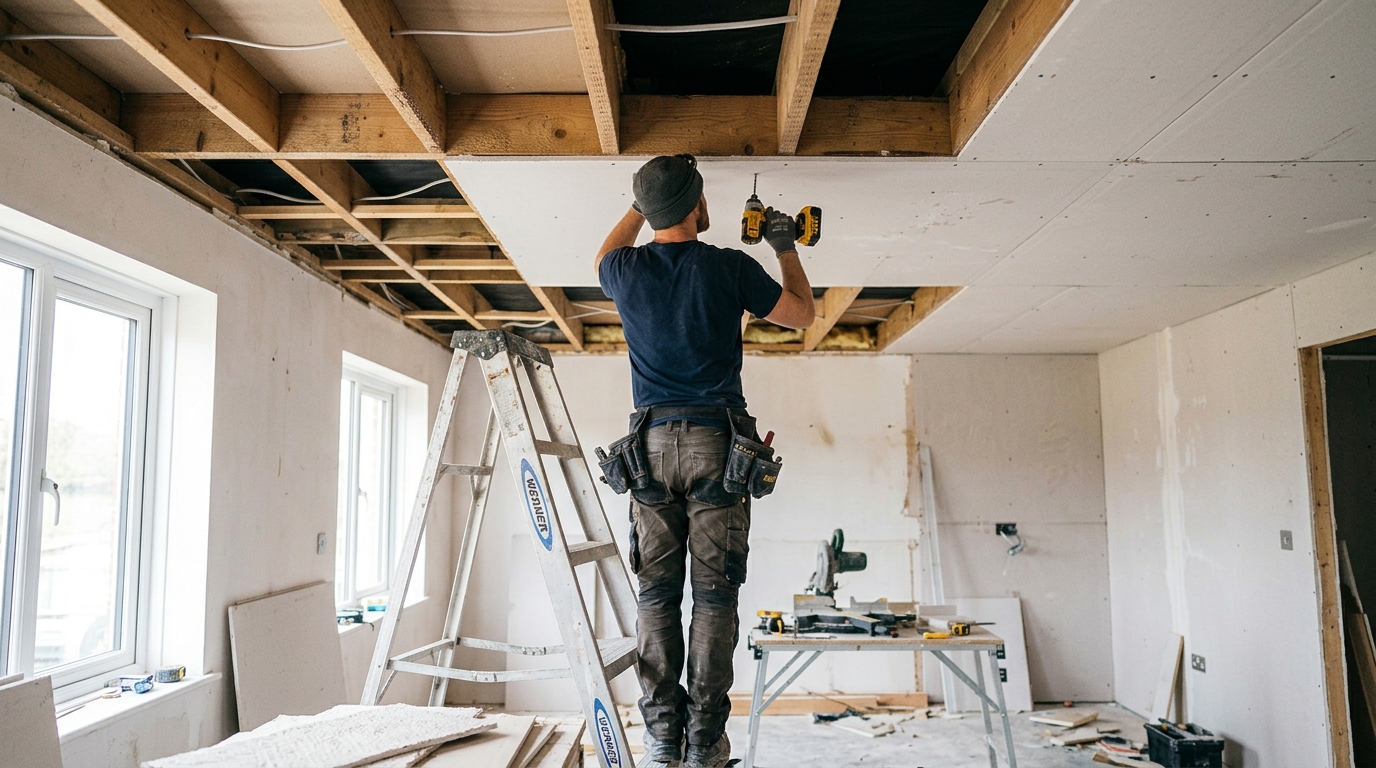
Ceiling design plays a major role in defining the overall look and comfort of a space. Among the most popular modern solutions is the plasterboard ceiling, widely used in residential, commercial, and renovation projects. It offers a smooth finish, design flexibility, and practical performance advantages that make it a preferred choice for architects and builders.
What is a Plasterboard Ceiling?
A plasterboard ceiling is a suspended or fixed ceiling system made using gypsum-based boards attached to a metal or timber framework. It creates a flat, seamless surface that can be painted or decorated to match interior design styles.
This type of ceiling is known for its clean appearance, lightweight structure, and ability to integrate lighting, insulation, and soundproofing features.
Why Plasterboard is Popular in Modern Construction
Modern buildings require materials that are efficient, durable, and visually appealing. Plasterboard meets these needs by offering a balance of performance and design flexibility.
It is widely used because it:
- Creates smooth and even ceiling surfaces
- Allows hidden electrical wiring and lighting systems
- Improves acoustic performance in rooms
- Supports fire-resistant and insulated designs
- Works well in both new builds and renovations
These advantages make it a practical solution for a wide range of interior spaces.
Key Benefits of Using Plasterboard in Ceilings
Plasterboard ceilings offer several important benefits that contribute to both functionality and aesthetics.
Smooth and modern finish
It provides a clean surface that enhances interior design and lighting effects.
Lightweight structure
It reduces load on the building framework compared to traditional ceiling materials.
Design flexibility
Can be shaped into curves, levels, and decorative patterns.
Easy maintenance
Damaged sections can be repaired without replacing the entire ceiling.
Improved insulation
Helps in thermal and acoustic insulation when combined with proper materials.
Applications in Residential and Commercial Spaces
Plasterboard ceilings are used in various environments due to their versatility.
- Living rooms and bedrooms in homes
- Kitchens and dining areas
- Offices and corporate buildings
- Hotels and hospitality spaces
- Retail stores and shopping centres
- Hospitals and educational institutions
Each application benefits from its clean appearance and functional performance.
Types of Plasterboard Ceiling Designs
There are several design options available depending on project requirements and aesthetics.
Flat ceilings
Simple and widely used for minimalistic interiors.
Suspended ceilings
Ideal for hiding wiring, ducts, and mechanical systems.
Multi-level ceilings
Adds depth and visual interest to modern interiors.
Decorative ceilings
Used in luxury spaces with curves, patterns, or lighting effects.
Soundproof ceilings
Designed for offices, studios, and meeting rooms.
Installation Process Overview
Proper installation ensures durability and long-term performance.
Framework setup
Metal or timber framing is installed to support the boards.
Board fixing
Sheets are attached securely to the framework.
Joint treatment
Seams are filled and taped for a smooth surface.
Finishing layer
A final coating is applied for painting or decoration.
Quality checks
Ensures alignment, smoothness, and structural stability.
A well-installed plasterboard ceiling improves both appearance and functionality.
Common Problems and Their Solutions
Even though plasterboard is reliable, poor installation or maintenance can lead to issues.
Cracks at joints
Often caused by movement or improper sealing.
Sagging ceiling sections
Usually due to incorrect framing or excessive load.
Moisture damage
Occurs in areas with poor ventilation or leaks.
These problems can be avoided by using quality materials and skilled installation practices.
Design Trends in Modern Interiors
Ceiling design trends continue to evolve with architecture and interior styling.
- Hidden LED lighting systems
- Minimalist flat ceiling designs
- Floating ceiling effects
- Acoustic ceiling integration
- Geometric and layered patterns
These trends enhance both visual appeal and functionality of interiors.
Maintenance Tips for Long-Lasting Performance
To keep ceilings in good condition:
- Inspect for cracks or water stains regularly
- Avoid moisture buildup in bathrooms and kitchens
- Use high-quality paint finishes
- Repair small damages early
- Ensure proper ventilation in all rooms
Regular maintenance helps extend the life of ceiling systems.
Choosing the Right Ceiling System
Selecting the right ceiling depends on usage, budget, and design goals. Factors to consider include:
- Room size and purpose
- Acoustic requirements
- Fire safety needs
- Lighting design integration
- Moisture exposure levels
Professional guidance ensures the best results for long-term performance.
Conclusion
Ceiling systems are a key element in modern architecture, combining aesthetics with practical benefits. A well-designed plasterboard ceiling enhances interior beauty while offering durability, insulation, and flexibility.
Whether for homes or commercial spaces, plasterboard ceilings continue to be a reliable choice for creating clean, modern, and functional interiors that meet today’s design expectations.




