
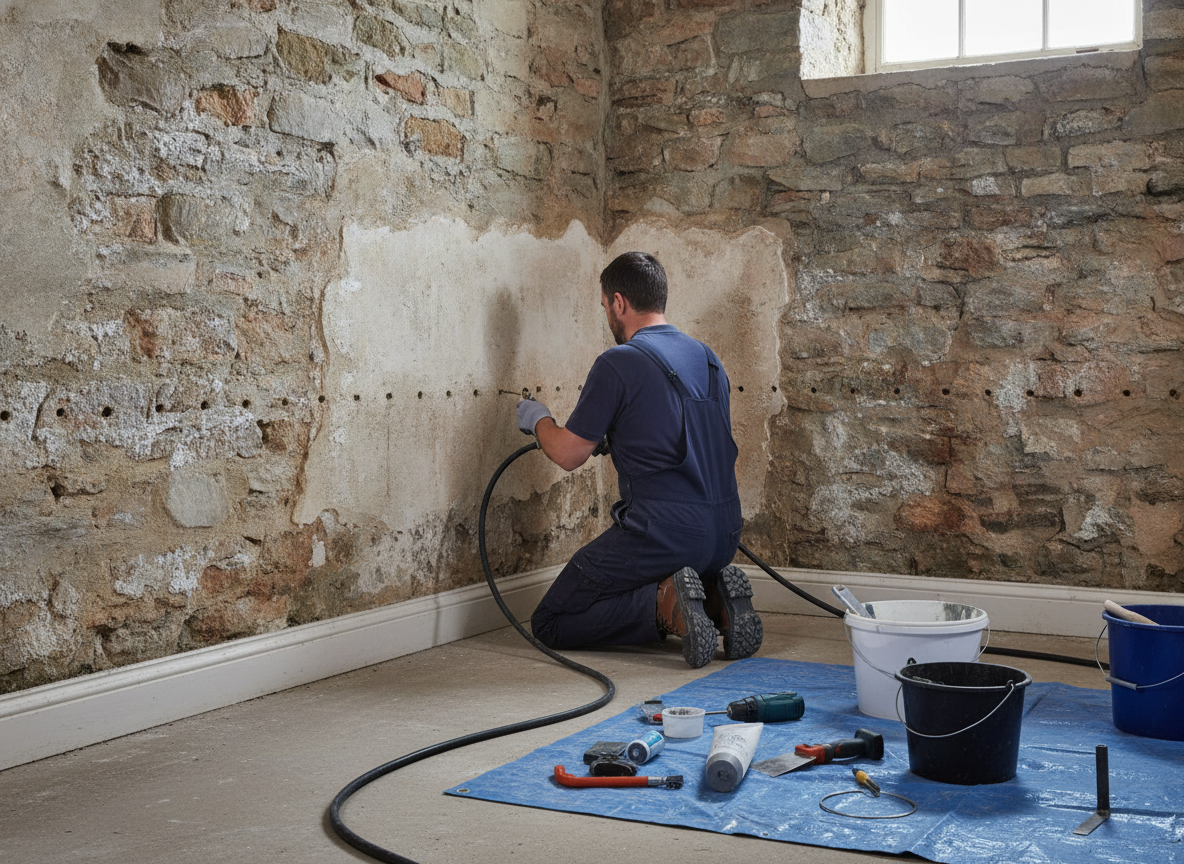
Rising damp is a common building issue caused by moisture travelling upward through walls and masonry materials. Over time, it can affect structural materials, interior finishes, and indoor air quality if left untreated. Understanding the role of a rising damp specialist in Sydney helps property owners recognise the causes, warning signs, and treatment methods associated with this form of moisture intrusion.
Understanding How Rising Damp Develops
Rising damp occurs when groundwater moves upward through porous construction materials such as bricks, mortar, or stone. This movement is usually caused by a failed or missing damp-proof barrier.
- Moisture travels upward through capillary action in masonry
- Older buildings are more likely to have deteriorated damp-proof courses
- Groundwater levels and drainage issues can increase moisture absorption
- Porous wall materials allow water to spread through internal structures
Common Signs of Rising Damp in Buildings
Visible and structural indicators often appear gradually as moisture accumulates within walls. Early identification can help reduce long-term damage.
- Peeling paint and bubbling plaster near lower wall sections
- Discoloured patches or tide marks on internal walls
- Crumbling skirting boards and damaged timber finishes
- Musty odours caused by prolonged moisture exposure
Salt Deposits and Surface Damage
As moisture evaporates from walls, salts carried from the ground remain behind and affect surface finishes.
- White powdery deposits appear on brick or plaster surfaces
- Salt build-up weakens paint adhesion over time
- Repeated moisture cycles increase wall deterioration
Causes That Contribute to Rising Damp
Several environmental and structural factors can increase the likelihood of rising damp developing within a property.
- Damaged damp-proof courses allow groundwater penetration
- Poor site drainage keeps surrounding soil excessively wet
- Cracked masonry creates additional moisture pathways
- Ground levels positioned too high against external walls
Inspection Methods Used by Damp Specialists
Rising damp specialists use a range of inspection techniques to identify moisture sources and determine the extent of wall saturation.
- Moisture meters measure water content within walls
- Visual inspections identify staining and material damage
- Salt analysis may confirm moisture movement from the ground
- External drainage and ventilation systems are assessed
Distinguishing Rising Damp from Other Moisture Problems
Accurate diagnosis is important because rising damp can resemble other forms of water intrusion.
- Condensation usually appears on colder wall surfaces
- Roof leaks often create isolated upper-wall staining
- Plumbing leaks may cause concentrated moisture patches
Treatment Methods for Rising Damp
Different treatment approaches are used depending on the building structure, severity of moisture, and wall materials involved.
- Chemical damp-proof injections create moisture-resistant barriers
- Damaged plaster may be removed and replaced after treatment
- Improved drainage reduces surrounding ground moisture levels
- Ventilation adjustments help walls dry more effectively
Long-Term Structural Effects of Untreated Damp
Persistent moisture can gradually weaken construction materials and create broader maintenance concerns within a property.
- Timber components may rot after prolonged exposure
- Plaster and render can detach from wall surfaces
- Metal fixtures may corrode in damp environments
- Repeated moisture cycles weaken masonry integrity
Preventative Measures for Moisture Control
Preventative maintenance can reduce the likelihood of rising damp returning after treatment has been completed.
- Keep external drainage systems clear and functional
- Maintain appropriate ground clearance below wall openings
- Repair cracks in masonry before moisture penetration occurs
- Monitor ventilation in enclosed or poorly ventilated areas
Importance of Regular Property Inspections
Routine inspections help identify moisture-related issues before significant structural damage develops.
- Early detection limits repair requirements
- Seasonal inspections reveal weather-related moisture changes
- Ongoing monitoring supports long-term wall stability
Conclusion
Rising damp can affect both the structural condition and internal environment of residential and commercial buildings. Identifying the source of moisture and applying suitable treatment methods are essential for preventing ongoing deterioration. By understanding inspection processes, warning signs, and preventative measures, property owners can better manage moisture-related risks. Consulting a rising damp specialist in Sydney supports informed decisions regarding damp detection, wall treatment, and long-term building maintenance.




