
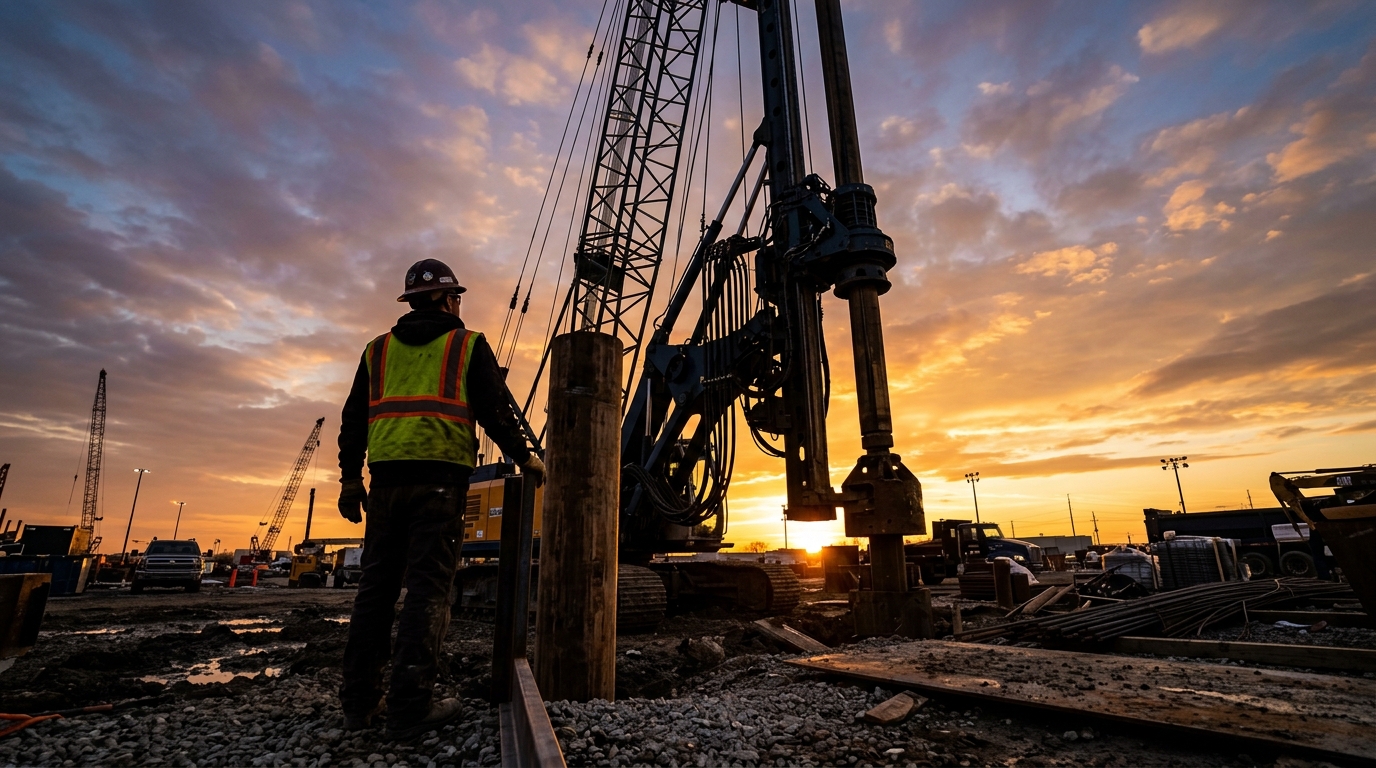
A strong foundation is essential for the safety, stability, and durability of any construction project. Whether it involves a residential development, commercial building, or infrastructure project, selecting the right foundation method can significantly influence the overall success of the structure.
Professional piling companies in Sydney provide specialised foundation solutions for projects where traditional foundations may not be suitable. By understanding soil conditions, structural requirements, and available piling techniques, property owners and builders can make informed decisions for their construction needs.
What Is Piling and Why Is It Used?
Piling is a deep foundation technique designed to transfer the weight of a structure from weaker surface soil to stronger layers beneath the ground. It involves installing long structural elements, known as piles, into the soil to create a stable base.
This method is commonly used when:
- The surface soil lacks sufficient strength
- Buildings require additional load support
- Ground conditions are unpredictable
- Construction takes place in challenging environments
Piling helps improve foundation stability and allows construction projects to proceed safely in areas where standard foundations may not provide enough support.
What Types of Projects Require Piling?
Piling solutions are used across a wide range of construction applications, including:
Residential Construction
Homes, extensions, and renovations may require piling when soil conditions create foundation challenges or when additional structural support is needed.
Commercial Developments
Large commercial buildings often rely on deep foundation systems to support heavier loads and maintain long-term stability.
Industrial Projects
Factories, warehouses, and specialised facilities may require strong foundations capable of supporting significant structural weight.
Infrastructure Projects
Bridges, retaining structures, and other civil engineering projects frequently use piling methods to improve ground stability.
How Do Piling Systems Work?
Piling works by transferring structural loads deeper into the ground where stronger soil or rock layers can provide support. The piles act as a connection between the building structure and stable underground conditions.
The process generally involves:
- Assessing the construction site
- Conducting soil investigationsSelecting an appropriate piling method
- Installing piles using specialised equipment
- Testing and inspecting the foundation system
Careful planning at each stage helps ensure the piling solution matches the project requirements.
What Are the Different Types of Piling Methods?
Different construction sites require different piling approaches. The choice depends on soil conditions, building design, access limitations, and project specifications.
Bored Piles
Bored piling involves drilling holes into the ground and filling them with reinforced concrete. This method is commonly selected for projects where reduced vibration and controlled installation are important.
Driven Piles
Driven piles are installed by pushing or driving piles into the ground. They are often used where strong load-bearing capacity is required.
Screw Piles
Screw piles are installed by rotating steel piles into the ground. They can be suitable for projects requiring efficient installation and minimal site disruption.
Mini Piles
Mini piling is useful for locations with limited access, including smaller residential sites and renovation projects.
How Do You Choose the Right Piling Specialists?
Selecting the right professionals requires evaluating several important factors. Experienced piling companies in Sydney should have knowledge of different soil conditions, construction environments, and foundation requirements.
Key considerations include:
Experience and Expertise
A company with experience across various projects can better understand potential site challenges and recommend suitable piling solutions.
Knowledge of Local Ground Conditions
Understanding soil behaviour and environmental factors helps professionals design an effective foundation approach.
Modern Equipment and Techniques
Advanced machinery and updated installation methods can improve accuracy, efficiency, and project outcomes.
Clear Project Planning
Detailed planning, communication, and assessment help create a smoother construction process.
Why Is Soil Testing Important Before Piling?
Soil testing provides valuable information about the ground beneath a construction site. It helps identify soil strength, moisture levels, and possible challenges that may affect foundation performance.
The results allow engineers and construction specialists to select an appropriate piling method and design a foundation system that suits the specific site conditions.
What Are the Benefits of Professional Piling Solutions?
Using professionally planned piling systems offers several advantages, including:
Enhanced Foundation Stability
Deep foundation solutions help support structures by reaching stronger ground layers below unstable soil.
Suitable for Complex Sites
Piling methods can be adapted for locations with difficult access, poor soil conditions, or unique construction requirements.
Better Load Support
Properly designed piles help distribute structural weight effectively and improve overall building stability.
Long-Term Structural Protection
A well-planned foundation system helps reduce risks associated with ground movement and settlement.
Frequently Asked Questions About Piling
Is piling necessary for every construction project?
No. The need for piling depends on factors such as soil conditions, building size, and engineering recommendations.
How long does a piling project usually take?
The timeframe depends on project complexity, site conditions, selected piling method, and preparation requirements.
Can piling be used for residential properties?
Yes. Piling is suitable for various residential applications, including new homes, extensions, and properties requiring additional foundation support.
Why should soil conditions be assessed before construction?
Understanding soil conditions helps determine the most suitable foundation approach and reduces potential structural issues.
Conclusion
Choosing the right foundation solution is a crucial step in any construction project. Understanding piling methods, site requirements, and professional assessment processes helps builders and property owners plan effectively.
Experienced specialists with technical knowledge and suitable equipment can provide foundation solutions designed for different construction environments. With proper planning and installation, piling systems can create a stable base that supports durable and reliable structures.




